Precision Boiler Diagnostic & Heating Restoration
Reliable heating is essential when winter winds sweep across the Kill Van Kull and Arthur Kill into North Shore Staten Island neighborhoods.
Local Boiler Challenges in Mariners Harbor Homes
Mariners Harbor is characterized by a distinctive mix of housing: historic turn-of-the-century wood-frame cottages, two-story post-war detached dwellings, and multi-family residential buildings along Forest Avenue, South Avenue, and Richmond Terrace. Many of these residences rely on single-pipe low-pressure steam boilers or multi-zone hydronic circulating systems that have operated reliably for decades.
However, Staten Island's maritime climate brings elevated salt-air moisture and sudden winter temperature drops that stress combustion components, pilot assemblies, and thermal expansion vessels. When a heating unit fails, the cause can range from a fouled optical flame sensor to water level safety cutoffs triggered by sediment buildup in older cast iron vessels.
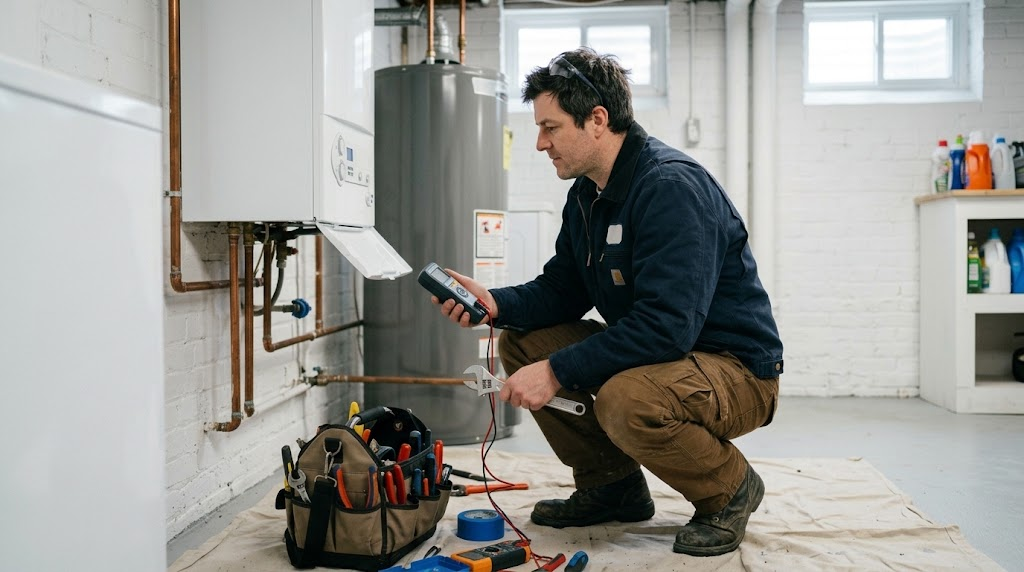
Our heating technicians perform thorough system evaluations rather than quick surface patches. We isolate electronic ignition failures, trace erratic pressure fluctuations, test aquastat high-limit switches, and recalibrate automatic water feeders to restore safe, balanced heating throughout your residence.
Common Boiler Breakdown Symptoms
Recognizing the early warning signs of boiler distress allows homeowners in Mariners Harbor to take action before a total heat blackout leaves pipes vulnerable to freezing:
- Complete Heat Failure (Lockout): The burner assembly fails to ignite, ignition sparks repeatedly without flame establishment, or the primary electronic control displays an error lockout code.
- Loud Kettling or Rumbling: Boiling water trapped beneath mineral lime deposits creates steam bubbles that collapse violently inside the heat exchanger, producing hammering sounds.
- Short-Cycling: The boiler turns on and off every few minutes without adequately warming the upper levels of the house, indicating faulty thermostats, failing circulator pumps, or undersized expansion tanks.
- Pressure Spikes or Relief Valve Discharges: The ASME pressure relief valve drips or opens fully, indicating waterlogged expansion tanks or failed pressure-reducing fill valves.
- Yellow or Irregular Burner Flames: Soot buildup or restricted air intake creates incomplete combustion, which presents an immediate safety risk.
| Heating System Type | Operating Operating Pressure | Primary Diagnostic Points | Common Mariners Harbor Issues |
|---|---|---|---|
| One-Pipe Steam Boilers | 0.5 – 2.0 PSI (Low Pressure) | Sight glass water level, Low-Water Cut-Off (LWCO), pigtail siphon, vaporstat calibration | Clogged float chambers, spitting radiator air vents, banging steam pipes from incorrect pipe pitch |
| Hydronic (Hot Water) Boilers | 12 – 20 PSI (Closed Loop) | Circulator pump amperage, bladder expansion tank, air purgers, zone valves, aquastat limits | Air bound baseboards, seized circulator motors, thermal relief valve dripping, zone valve failures |
| High-Efficiency Condensing Boilers | 15 – 30 PSI (Modulating) | Condensate trap drainage, direct-vent intake clearing, secondary heat exchanger flue acid check | Frozen outdoor PVC vent terminations during coastal blizzards, acid buildup in condensate lines |