Sump Pump & Flood Protection in Mariners Harbor, Staten Island
Heavy-duty submersible pumping systems, dual-battery auxiliary backups, and baseline flood defense for coastal Staten Island homes.
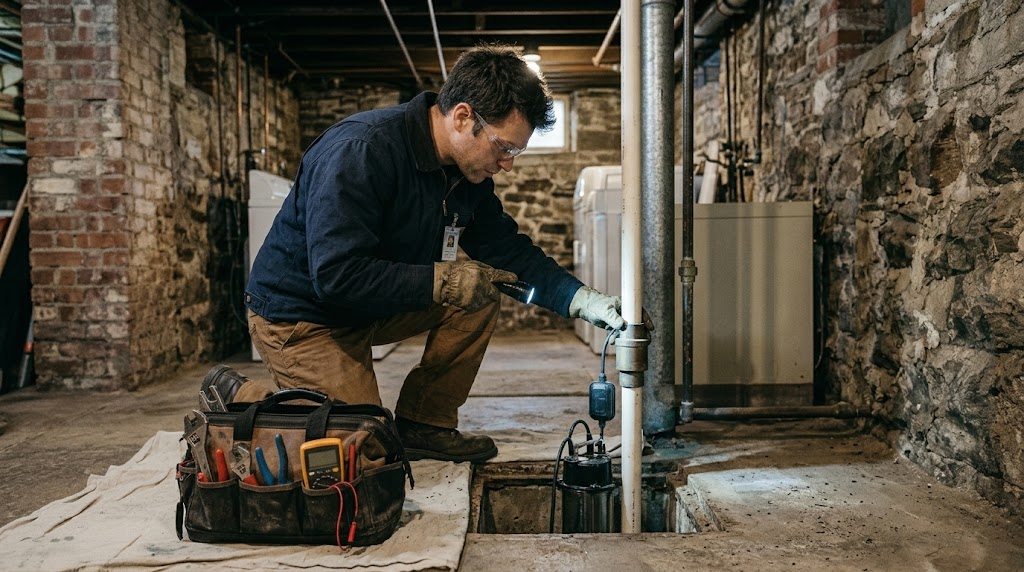
Defending Basements Against High Coastal Water Tables
Situated on the northwestern shore of Staten Island facing the Kill Van Kull and Arthur Kill, Mariners Harbor features low-elevation topography with a naturally elevated water table. During torrential rainstorms, high astronomical tides, or spring snow melts, hydrostatic groundwater pressure forces moisture through basement floor slabs and foundation wall seams.
A dependable sump pump system serves as the primary line of defense protecting finished basements, electrical panels, and expensive boilers from catastrophic flood waters. When a pump motor burns out or a float switch jams, flood waters can accumulate rapidly, causing thousands of dollars in property damage within hours.
We install professional-grade cast iron submersible pumps engineered to evacuate up to 4,000 gallons per hour. Our installations include silence-dampened check valves, dedicated GFCI electrical circuits, and dual-battery auxiliary backup configurations that safeguard your property even when coastal windstorms bring down municipal power lines.
Critical Sump Pump Failure Points
Regular system inspection ensures your pumping equipment engages reliably when severe weather strikes:
- Mechanical Float Switch Malfunctions: Float switches can catch against the basin wall or become weighted down with silt, preventing the pump from energizing as water levels rise.
- Failed or Missing Check Valve: Without a working one-way check valve, pumped water in the vertical discharge column falls back into the sump basin, causing the pump to cycle continuously.
- Clogged Basin Weep Holes & Impellers: Fine silt, sand, and debris common in coastal Staten Island soil can choke pump impellers, causing thermal overload lockouts.
- Discharge Pipe Freezing: In sub-freezing weather, exterior discharge pipes can ice over, blocking water outflow and forcing the pump to burn itself out against a dead head.
- Electrical Outages During Severe Storms: Primary alternating-current pumps fail instantly when utility power drops unless paired with a smart battery inverter system.
| System Configuration | Horsepower / Flow Rate | Ideal Application | Storm Resiliency |
|---|---|---|---|
| Primary Submersible Cast Iron | 1/3 to 1/2 HP (3,000–4,200 GPH) | Standard residential basements with moderate groundwater seepage | Requires active AC household utility power |
| Dual Auxiliary Battery Backup | 12V Deep Cycle Marine Battery (2,500 GPH) | High water table zones near Richmond Terrace & Western Avenue | Provides 24–48 hours continuous pumping during power blackouts |
| Dual Alternating Primary Sump | Twin 1/2 HP Commercial Pumps with Controller | Large multi-family residences or commercial basements | Automatic failover if one pump mechanically trips |
Frequently Asked Questions
A continuously running pump usually indicates a stuck mechanical float switch, a broken check valve that allows discharged water to flow back into the pit, or an elevated coastal water table common along low-lying areas of Mariners Harbor near the Kill Van Kull.
Extremely important. Severe coastal storms, nor'easters, and hurricanes frequently cause municipal electrical grid blackouts at the exact moment heavy rainfall threatens to flood basements. A dedicated battery backup pump activates automatically during power outages to protect your foundation and heating equipment.
A quality cast-iron submersible sump pump typically lasts 7 to 10 years depending on run frequency and water table conditions. We recommend preventative testing each autumn before storm and freeze cycles.
A check valve installed on the vertical discharge pipe prevents gallons of pumped water from draining backward into the sump basin every time the pump stops. This prevents rapid short-cycling and motor burnout.