Gas Line Repair & Inspection in Mariners Harbor, Staten Island
Certified gas piping diagnostics, high-precision pressure testing, and NYC Department of Buildings compliance.
If you smell gas, hear hissing, suspect a carbon monoxide leak, or believe you are in immediate danger, evacuate the building immediately and call 911 or the Con Edison emergency gas hotline at 1-800-75-CONED (1-800-752-6633) from a safe outdoor distance. Do not operate light switches, open windows, or use phones inside the structure.
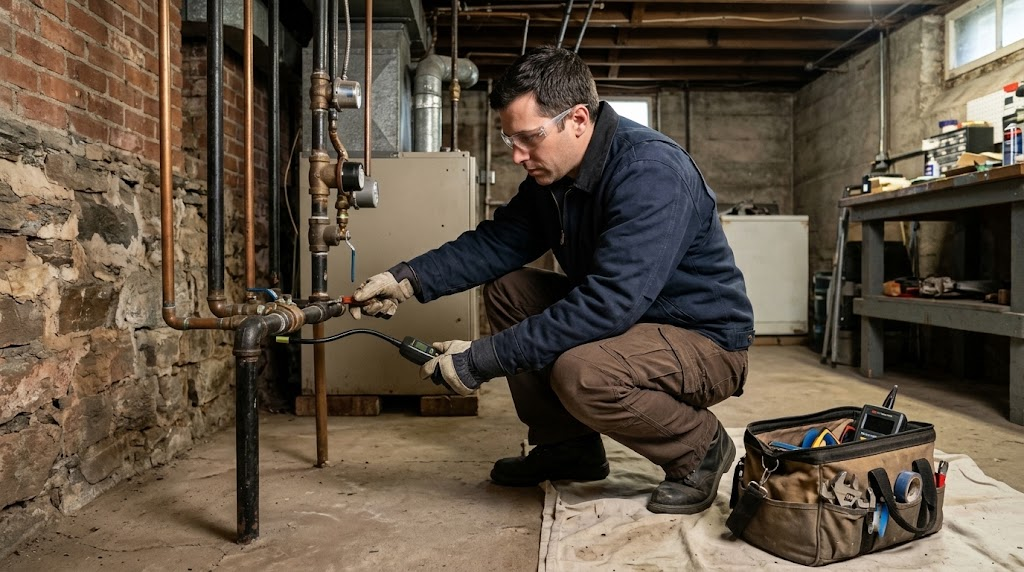
Rigorous Standards for Residential Fuel Gas Systems
Natural gas fuels the vital mechanical hearts of most Mariners Harbor residences, powering central boilers, domestic water heaters, clothes dryers, and kitchen ranges. Because natural gas is combustible and volatile under pressure, fuel piping systems demand the highest standard of technical care and strict adherence to the New York City Fuel Gas Code.
In older Staten Island neighborhoods, residential gas distribution relies on heavy black steel or malleable iron threaded pipe. Years of exposure to damp basement environments—especially near coastal maritime corridors such as Forest Avenue, South Avenue, and Western Avenue—can produce exterior flaking, rust scaling, and seam degradation. Even a minor leak at a dried joint compound fitting can cause dangerous vapor accumulation in enclosed utility spaces.
Our licensed mechanics perform comprehensive gas piping repairs, valve replacements, and full system pressure decay evaluations. When utilities lock a meter due to suspected leakage, we handle every stage of the repair, city inspection scheduling, and utility sign-off to restore heating safely and legally.
Our Comprehensive Gas Piping Services
We provide full-scope gas mechanical engineering and code compliance across North Shore Staten Island:
- Precision Gas Leak Detection: Utilizing digital combustible gas detectors and micro-manometer pressure monitors to find pinhole leaks behind walls or in subterranean lines.
- Gas Pressure Testing & Certifications: Pressurizing piping systems to code requirements (typically 3 to 15 PSI) to verify zero pressure decay over required observation windows.
- Utility Lock-Off Restorations: Rapid response when a gas utility has padlocked your gas meter, providing code-compliant pipe rebuilds and DOB filing submissions.
- Appliance Gas Line Upgrades: Running properly sized black steel lines for high-BTU modulating boilers, on-demand tankless heaters, or commercial-grade stoves.
- Shutoff Valve Replacements: Upgrading vintage seized lubricated plug valves to modern quarter-turn ball valves equipped with tamper-proof levers.
Steps to Gas Service Restoration After a Lockout
1. Pressure Isolation
We disconnect all appliances, cap branch valves, and pressurize the system with inert gas to isolate the precise breach point using calibrated digital instruments.
2. Code-Compliant Piping
Damaged pipe sections are cut out and replaced with ASTM-rated schedule 40 black steel pipe, malleable iron fittings, and approved gas-rated sealant.
3. DOB Inspection & Unlock
We conduct the official witness test, file all completion paperwork with the NYC DOB, and coordinate with the utility inspector to safely restore your fuel flow.
Frequently Asked Questions
Immediately evacuate all occupants from the home. Do not flip light switches, open windows, operate appliances, or use your phone inside. Once safely outdoors and away from the building, call 911 and the emergency utility hotline.
Technicians use calibrated combustible gas sniffers, ultrasonic leak detectors, and non-corrosive bubbling solutions on pipe joints. For comprehensive verification, we isolate the piping system and conduct a pressurized gas pressure test monitored by a digital manometer or mercury gauge.
Restoring gas service after a lock-off requires filing work permits with the NYC Department of Buildings (DOB), repairing all leaking piping sections, passing an official DOB gas integrity pressure inspection, and submitting authorization forms to the gas utility to remove the lock.
Basement humidity driven by proximity to the Kill Van Kull and Arthur Kill coastal waterways accelerates atmospheric oxidation on exposed black iron pipe, especially where pipes penetrate masonry foundation walls.