Sewer Line Repair in Mariners Harbor, Staten Island
Advanced diagnostic camera inspections, heavy root clearing, and structural underground sewer line restoration.
Subsurface Sewer Challenges on Staten Island's Waterfront
Mariners Harbor has a rich maritime history with diverse residential development dating from the late 19th century through modern subdivisions. Many older streets near Richmond Terrace, Harbor Road, and Western Avenue feature original vitrified clay or cast iron sewer laterals buried beneath front yards, sidewalks, and streets.
Clay tile pipes are prone to joint shifting and root intrusion from mature street trees. In coastal and low-elevation zones of North Shore Staten Island, high water tables and tidal soil shifts can create pipe "bellies" (low sags in the line where grease and solids pool instead of flowing smoothly). Over time, bellied pipes cause repetitive backups that standard drain snaking cannot permanently resolve.
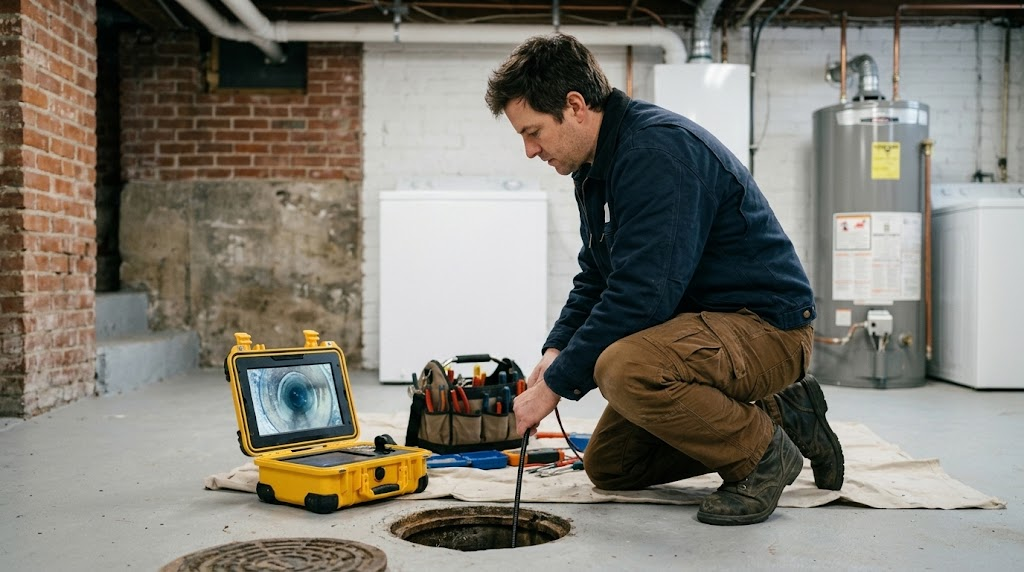
Our experienced plumbing crews deploy fiber-optic sewer cameras to pinpoint fractures, misaligned slip-joints, and foreign obstructions. Once diagnosed, we advise on the most cost-effective path forward, whether targeted spot repairs, trenchless relining, or complete exterior lateral replacement.
Warning Signs of a Failing Main Sewer Lateral
Recognizing the difference between a simple branch drain clog and a main sewer line failure prevents catastrophic basement wastewater damage:
- Multiple Simultaneous Backups: If flushing a toilet causes water to gurgle up into the bathtub or basement floor drain, the main lateral is blocked.
- Persistent Gurgling Drains: Air bubbles forced backward through water traps produce distinctive bubbling noises when washing machines or dishwashers drain.
- Foul Sewer Odors Indoors or in the Yard: Cracked sewer pipes release toxic hydrogen sulfide gases into crawlspaces, basements, or soil beds.
- Depressions or Unexplained Lush Patches in the Lawn: A compromised underground sewer pipe saturates surrounding dirt, creating sinkholes or unusually green grass over the pipe run.
- Repeated Need for Snaking: If you must snake your main drain every few months, root invasion or structural pipe collapse is occurring.
| Restoration Technique | Ideal Scenario | Key Advantages |
|---|---|---|
| Open-Cut Excavation | Severely crushed pipes, collapsed sections, or severe pipe pitch reversal | Allows complete installation of heavy-gauge schedule 40 PVC with proper slope |
| Trenchless Pipe Bursting | Brittle clay or cast iron pipes requiring full replacement without yard destruction | Pulls a continuous seamless HDPE line through the existing footprint with minimal digging |
| Hydro-Jetting & Root Milling | Heavy grease deposits, soft silt blockages, or dense seasonal root bundles | Cleans the full interior diameter of the pipe back to bare metal or clay walls |
Frequently Asked Questions
Frequent sewage backups in basement floor drains, multiple fixtures backing up simultaneously, persistent sewer gas odors in the yard or basement, and soggy patches or sinkholes along your property's front lawn are classic indicators of a cracked or collapsed sewer lateral.
Under New York City Department of Environmental Protection (DEP) regulations, property owners are responsible for the entire sewer lateral running from the house all the way to its connection point at the municipal sewer main in the street, including the curb connection.
A high-resolution optical camera attached to a rigid push-rod is inserted into the main cleanout. It transmits real-time high-definition footage revealing the exact location, depth, and nature of the obstruction—such as tree roots, bellies, fractures, or collapsed clay pipe.
Mechanical snaking or hydro-jetting cuts away current root masses, but roots will re-enter through pipe joints unless the pipe is permanently repaired through structural lining or physical pipe replacement.